2 hours ago
Latest Updates
Featured Posts
Get in Touch
Location:
123 Innovation Street
Tech District, CA 94105
123 Innovation Street
Tech District, CA 94105
Email:
[email protected]
[email protected]
Phone:
+1 (234) 567-890
+1 (234) 567-890
Unconquerable A Thing of the Past: Why India's Red-Ball Cricket Legacy Is in Tatters
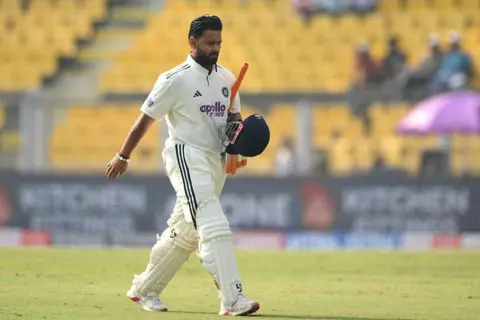
The Indian cricket team's unexpected 0-2 loss to the Proteas in the recently concluded Test series has sent shockwaves through the squad.
Earlier this week, South Africa inflicted upon India their heaviest loss in Test cricket, against all odds. It was the Proteas' first series win in the subcontinent in 25 years and the host nation's second defeat at home in just one year after a 12-year invincible streak.
The winning rhythm established in the previous half-year has largely dissipated and the prospects of several players - including team coach Gautam Gambhir - are now uncertain.
Initial Hope Vanishes
The new-look squad's strong showing in England this summer, under a fresh leadership, indicated a smooth transition post the close together exits of key players R Ashwin, Sharma, and Kohli.
A straightforward 2-0 win over the Windies at the beginning of the home season enhanced that perception, before the Proteas arrived to deliver a crushing loss.
The home side were somewhat unlucky that leader Gill suffered an injury very early in the initial match and took no further part in the contest. Yet that fails to account for the squad of the highly disappointing performance in each match against the opposition.
Some big reputations were damaged, and several players hoping for long red-ball careers were exposed as still inadequate - technically or mentally - for the longer format.
A Troubling Pattern
This represented the second series sweep on home soil experienced by the Indian team in just over a year. Last year, little-fancied the Kiwis had pulled off a remarkable 3-0 victory which essentially denied India a place in the Test championship finale.
The latest loss to South Africa risks harming the team's chances of making the final of this cycle also.
After being third in the Test championship standings ahead of the matches, the side have fallen to fifth place. Though nine additional matches are yet to be played, five of these are against Australia. Typically, playing at home would be a major plus - including against the powerful Australians. Yet the debacles against the Kiwis and the Proteas offer no room for such assurance.
Reasons for the Slump
The national team's vulnerability in Test cricket has been badly exposed. That said, the reason India have fared so badly in Test matches at home in recent times is continues to confuse.
From the year 2000 onwards, the Indian cricket team were seen as unbeatable in red-ball cricket in home conditions. In demanding climates and on surfaces that assisted spinners and suited their batsmen and bowlers, India faced little challenge. A rare failure, like in 2012-13 against the English, was seen as an exception.
Now, the team appear to be easy pickings on home turf.
Facing New Zealand in last year and South Africa currently, the home side were beaten at their own game. The surfaces they curated to help their style failed miserably, as the opposition used them more effectively, beating the home team's players when it mattered most.
What Happened?
A few experts argue that India is floundering in home conditions because local wickets have been changed from turners to quick wickets to get cricketers ready to succeed abroad.
Some point out that the domestic T20 league, in which numerous foreign cricketers take part, has removed the surprise and difficulty subcontinental pitches would present to them in the past.
While there is some truth in each argument, it does not clarify why the side's results at home have witnessed such a staggering decline.

Multiple Failings
Most former players diagnose a complex, multi-headed problem, not just a few causes.
Analysts and squad members have highlighted various flaws following the team's embarrassing defeat to the Proteas: underestimating the opposition, inadequate readiness, flawed selections, excessive self-belief, frequent changes of the playing XI, and prioritising white-ball over the longer format.
This was obvious in the performances of the team.
Players like Rishabh Pant and Jaiswal, of whom high hopes were held, paid for their lack of application, while Sudarshan, Reddy, and Dhruv Jurel - who were looking to cement their place in the team - came up short in skill and mindset, paying a heavy price for their casual attitude.
Just a few - Jadeja, Bumrah, Kuldeep, Siraj and Washington Sundar - fulfilled their ability and standing - but not well enough to secure victories.
Management Questions
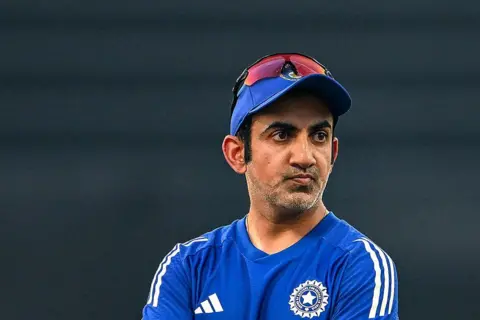
The post-mortem didn't spare just the players - team selectors and backroom team were also questioned, fuelled by upset followers and outspoken ex-cricketers. In the spotlight of the examination was mentor Gambhir.
During his post-series press

Eric Edwards
Maya Chen is a tech journalist and gaming expert with over a decade of experience covering digital trends and innovations.
 News
Sponsored News
News
News
News
Colombia's President Declares 'I Shall Return to Arms Again' should US Invades.
Eric Edwards
03 Oct 2026
News
News
News
'We’re like a family here': Habib Diarra celebrates good times at the Black Cats.
Eric Edwards
03 Oct 2026